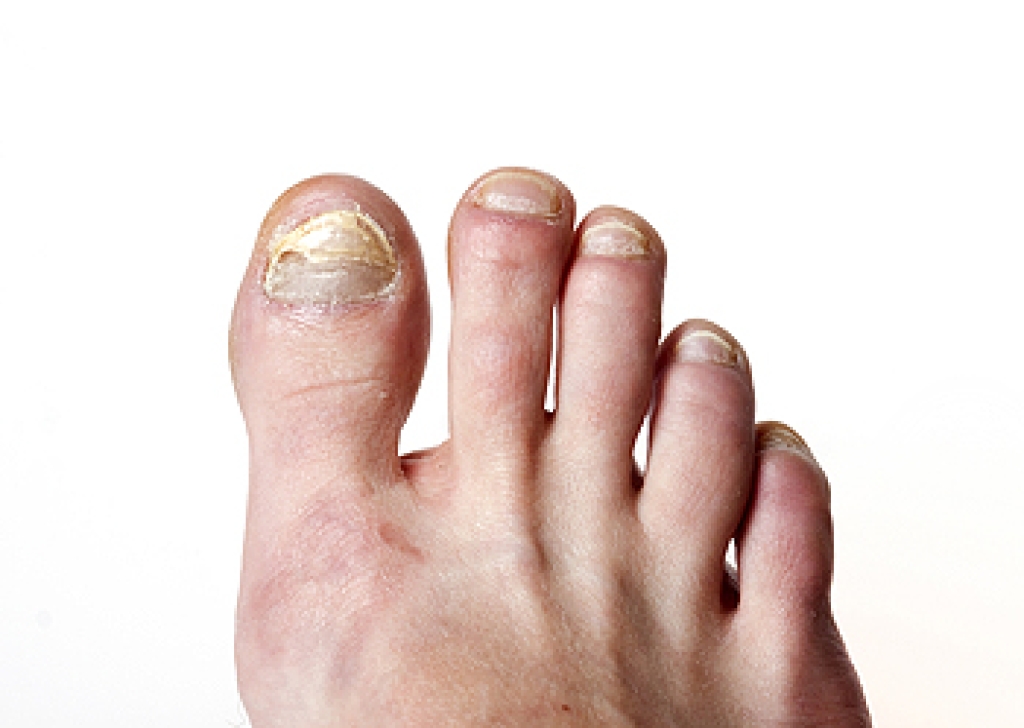
Another word for toenail fungus is onychomycosis. It is a common fungus that causes the toenail to thicken, crumble, and become stained. Toenail fungus is more common among older adults, especially those older than 65. It is highly contagious and can easily spread just by touching the nail. It can also be transmitted by touching a surface that has been contaminated by the fungus through spores that are shed from the infected nail. Toenail fungus can be caused by too many dermatophytes or too much yeast in the nail. Fungal spores rapidly multiply and thrive in moist, warm conditions like sweaty feet, damp socks, and wet shoes. Any sore or opening in the skin can invite the fungus in, where it feeds off the nail and burrows underneath it. Eventually, the nail will rise above the nail bed. The nail can never reattach, but can eventually grow out if treated. If left untreated, a toenail infection can spread to other toenails or body parts. For help in eliminating toenail fungus, please contact a chiropodist.
Toenail fungus can be uncomfortable and unsightly. If you have diabetes or a compromised immune system, it may also be dangerous. To learn more about treatment options, please consult with one of the chiropodists from The Footcare Centre. Our chiropodists will assess your condition and provide you with quality foot and ankle treatment.
What Does Toenail Fungus Look Like?
A fungal infection of the toenail may cause the affected nail to become thickened, brittle, crumbly, and yellowish or brown in color. Sometimes the toenail may separate from the nail bed, become deformed, emit a foul odor, or cause pain or discomfort.
What Causes Toenail Fungus?
Toenail fungus is caused by a fungus that infects the nail bed. The fungus lives and thrives in warm and moist environments and is also contagious. Athlete’s foot, which is a fungal infection of the skin, may spread to the nails and cause toenail fungus.
What Treatments Are Available?
Potential treatments for toenail fungus may include oral antifungal medications, topical antifungal medications, such as medicated nail polishes that are applied directly to the affected nail, and laser therapy. Sometimes, a combination of treatments is prescribed.
If you have any questions please feel free to contact our office located in Niagara Falls, ON .
