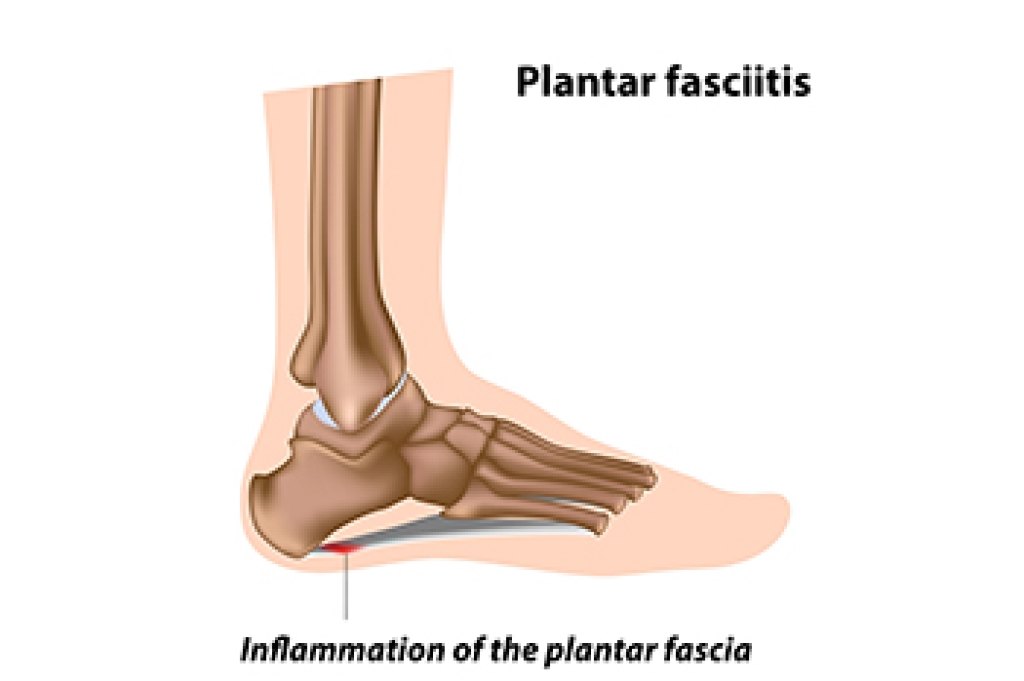
Many people suffer from the pain of plantar fasciitis, an inflammation of the tough band of tissue that runs beneath the foot. This tissue, called the plantar fascia, connects the heel to the base of the toes and helps support the arch. Plantar fasciitis, considered to be an overuse injury, can result from long bouts of standing or walking. It is also common among runners and other athletes who land on hard surfaces with their full weight for long periods. The first sign of plantar fasciitis usually occurs when standing up after a long rest, resulting in pain in the heel. Risk factors for developing plantar fasciitis include having flat feet or high arches, wearing shoes that do not provide ample cushioning in the heel and support for the arch, being overweight, and having tight calf muscles. Recovery from plantar fasciitis can take months, so it should not be ignored. If you are experiencing heel pain and think it might be caused by plantar fasciitis, it is suggested that you consult a chiropodist for a diagnosis and treatment.
Plantar fasciitis can be painful and interfere with your daily activities. If you are experiencing foot or heel pain and believe you may be afflicted with plantar fasciitis, please consult with one of the chiropodists from The Footcare Centre. Our chiropodists will assess your condition and provide you with quality foot and ankle treatment.
What Is Plantar Fasciitis?
Plantar fasciitis refers to the inflammation of the plantar fascia, a ligament that runs along the bottom of the foot and connects the heel bone to the toes. Repetitive activities, such as running or jumping, can injure the plantar fascia over time. Plantar fasciitis can also be caused by flat feet, high arches, pregnancy, and activities that put excessive pressure on your feet, like standing all day for work. When the plantar fascia becomes inflamed, it causes pain and discomfort.
Symptoms
Typical symptoms of plantar fasciitis include:
- Stabbing pain near the heel
- Pain that is worst in the morning or after a period of rest
- Pain that increases after exercising
- Swelling
- Tightness in the Achilles tendon
Diagnosis
Plantar fasciitis is typically diagnosed via medical history and physical examination.
Treatment
Treatments for plantar fasciitis include resting and icing the affected foot, stretching the foot, taking medications to reduce inflammation, and wearing orthotics. In severe cases where pain does not improve with conservative treatments, injections or surgery may be recommended.
If you have any questions please feel free to contact our office located in Niagara Falls, ON .
